Star profile
What happened to Frank Sinatra after his career collapsed in 1952
By 1952 Frank Sinatra had lost his record label, MCA and most of his audience. A film role and a new arranger in 1953 began a second career that ran until his death in 1998.
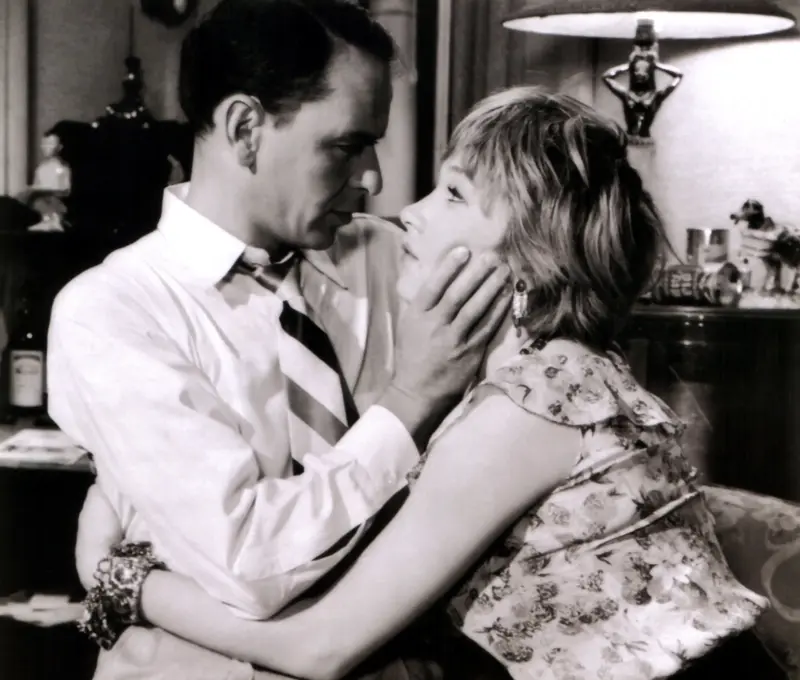
Photo: DoctorMacro.com
On April 30, 1953, Frank Sinatra returned to KHJ in Los Angeles, the studio at 5515 Melrose Avenue where his first Capitol Records session had been held with Axel Stordahl conducting. He had spent two weeks on location in Hawaii filming From Here to Eternity, and this was his first session with Nelson Riddle, an established Capitol arranger and conductor who was Nat King Cole’s musical director. The first song they recorded was “I’ve Got the World on a String.” When it was done, Sinatra gave Riddle one word of praise, “Beautiful!”, and praise from him was rare. After hearing the playbacks he couldn’t hide how he felt: “I’m back, baby, I’m back!”
What had happened to Frank Sinatra in the years before that session was a collapse. Between 1950 and 1952 he went from the idol of the bobby-soxers to half-empty rooms, and both his record label and MCA dropped him. What followed was a revival: an Academy Award, the Capitol albums with Riddle, his own record label, a retirement in 1971 that lasted only two years, a fourth and final marriage, and his death on May 14, 1998.
The boy from Monroe Street
He was born on December 12, 1915, in a tenement at 415 Monroe Street in Hoboken, New Jersey, the only child of the Italian immigrants Dolly and Marty Sinatra. He never learned to read music and sang by ear. In 1939 the bandleader Harry James signed him for $75 a week. That November he left James to sing for Tommy Dorsey at $125 a week. Dorsey’s contract entitled the bandleader to 43% of Sinatra’s lifetime earnings, and the legal fight over it wasn’t settled until August 1942. When the two men parted on September 3, 1942, Dorsey reportedly told him, “I hope you fall on your ass.” Rumors then spread through the newspapers that Willie Moretti, Sinatra’s godfather and a mobster, had forced Dorsey at gunpoint to release him for a few thousand dollars.
He didn’t fall. His opening at the Paramount Theatre in New York on December 30, 1942, set off what became known as Sinatramania, and by 1946 he was earning up to $93,000 a week. Donald Clarke’s All or Nothing at All is one of the full-length biographies that covers this rise from Hoboken to stardom as a pop singer and in Hollywood.
Two years at the bottom
The slide began quietly. At the end of 1948 he had dropped to fourth in DownBeat’s annual poll of popular singers. Press coverage of his Mafia connections was already loud enough that when he played a priest in The Miracle of the Bells, it was announced that his $100,000 fee would go to the Catholic Church. In January 1950 his publicist, George Evans, died. Evans was the man who had shaped Sinatra’s public image as a shy, vulnerable kid with a rough childhood who made good. In February the papers reported his affair with Ava Gardner and the breakup of his marriage to Nancy Barbato, though Sinatra insisted the marriage had been over before he met Gardner. Gossip columnists Hedda Hopper and Louella Parsons, the Hollywood establishment, the Catholic Church and his own fans all criticized him for leaving his wife.
His body started to give out too. That April a submucosal hemorrhage of the throat forced him to cancel five days of an engagement at the Copa in New York. Evans had once said that when Sinatra lost his voice, emotional strain was always the cause. Short of money after the divorce, Sinatra had to borrow $200,000 from Columbia to pay back taxes, because MCA would not front it. He made his Las Vegas debut at the Desert Inn in September 1951 and played to houses that were half full. At the Chez Paree in Chicago only 150 people came to a room that held 1,200. By April 1952 he was singing at the Kauai County Fair in Hawaii.
At Columbia, the A&R executive Mitch Miller said he “couldn’t give away” Sinatra records. Sinatra’s last studio date for the label took place in New York on September 17, 1952. The song was “Why Try To Change Me Now,” arranged and conducted by Percy Faith. Later that year both Columbia and MCA let him go. The journalist Burt Boyar summed up the fall: “Sinatra had had it. It was sad.”
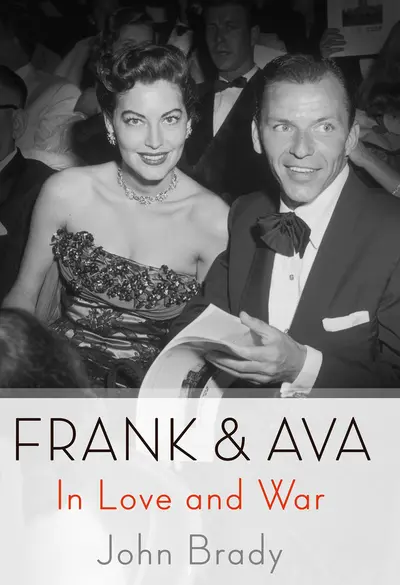
The publisher of John Brady’s Frank & Ava puts the private side bluntly: Sinatra’s passion for Gardner wrecked his marriage and brought him near ruin. He and Gardner married in 1951. Gardner used her considerable influence, particularly with Harry Cohn, to get him cast in From Here to Eternity.
He got the part, and that is where the turn came.
New articles by email
An occasional email when a new article is out. No spam, unsubscribe any time.
Thanks. You are on the list.
The second act
On March 13, 1953, he signed a seven-year contract with Capitol vice president Alan Livingston. From Here to Eternity opened that August, and the role won him the Academy Award for Best Supporting Actor and revived both his acting and his singing. His first Capitol album, Songs for Young Lovers, came out on January 4, 1954. The single “Young at Heart” reached No. 2 that same month. Billboard named Swing Easy! its Album of the Year, and in 1954 Billboard, DownBeat and Metronome all voted him favorite male vocalist. Tom Santopietro describes a man who buried himself in recordings, movies and concerts at a pace he had never kept before. The publisher of James Kaplan’s biography Frank frames the whole book around this arc, from Hoboken to the fall and then to the Oscar-winning return.
The studios now sold him on that Oscar. MGM’s pressbook for Some Came Running in 1958 reminded exhibitors that he had won the Academy Award for his performance in Jones’s From Here to Eternity and called the new film his second big role from a Jones novel. He played Dave Hirsh, a writer whose two published novels had earned him little, opposite Dean Martin and Shirley MacLaine. Much of it was filmed in Madison, Indiana, which the studio said was 2,126 miles from Los Angeles, with a location crew of 70. In those years he also starred in The Man with the Golden Arm and won a Golden Globe for Pal Joey, and in 1960 he left Capitol to start his own label, Reprise. In 1962 he starred in The Manchurian Candidate.
By 1965 the studios’ copy had grown with him. Fox’s campaign manual for Von Ryan’s Express cast him as Colonel Joseph Ryan and built its ads around a single question: why did 600 Allied prisoners hate the man they called Von Ryan more than they hated Hitler? That same year Warner Bros.’ pressbook for Marriage on the Rocks called him “the world’s No. 1 show business personality” and pointed to his dramatic performances in Von Ryan’s Express and None But the Brave, which he also directed, as evidence of his versatility. In Marriage on the Rocks he played the president of an advertising agency, contented after 19 years of marriage to Deborah Kerr, and his daughter Nancy played his daughter. Warner added that Trini Lopez, a singer Sinatra had discovered, was making his film debut. The screenwriter, Cy Howard, quoted in the same pressbook, said the comedy showed that “divorce accomplishes nothing.”
His own marriages kept making news. Gardner filed for divorce in 1954, and it became final in 1957. The two stayed good friends for the rest of her life. On July 19, 1966, he married Mia Farrow, who was 21 to his 50, and she left the television series Peyton Place at his urging. Her biography calls that marriage short-lived. On July 11, 1976, he married Barbara Marx. It was his fourth marriage and her third, and it lasted the longest for both of them. She converted to Catholicism and later wrote, in Lady Blue Eyes, that he had never asked her to change faith for him. In 1986 the couple founded the Barbara Sinatra Children’s Center in Rancho Mirage, which offers therapy to young victims of abuse.
Professionally, he retired in 1971 after “My Way” and came back two years later. He released “New York, New York” in 1980 and sold an estimated 150 million records worldwide. He received the Kennedy Center Honors in 1983, the Presidential Medal of Freedom in 1985 and the Congressional Gold Medal in 1997. He also painted. In 1991 Random House published A Man and His Art, with 60 of his oils and acrylics. The publisher said he had been a serious painter for more than 20 years. When Gardner had a stroke in 1986, he wanted to pay for her to see a specialist in the United States, and she let him arrange a private plane with medical staff. She died in London in January 1990.
Sinatra died on May 14, 1998. He left Barbara $3.5 million in assets, houses in Beverly Hills, Malibu and Palm Springs, the rights to his Trilogy recordings, and control over his name and likeness. When she died in 2017 she was buried beside him at Desert Memorial Park.
The last song he had recorded for Columbia, in September 1952, was “Why Try To Change Me Now.” The next spring, on Melrose Avenue, he heard the first playbacks of the Riddle session and told the room he was back.
Gardner had pressed Harry Cohn to give him the part that started that comeback, and in 1954 she filed for divorce. Ava Gardner’s side of 1953 follows what she did in the year his career turned.
Read next
Star profile / Frank Sinatra
How Frank Sinatra died in 1998
CNN reported in May 1998 that Frank Sinatra died of a heart attack at 82, and his family said his last words were “I’m losing.” This is the dated record of the vigil, the funeral Mass and the private burial.
Continue readingQuick answers
What happened to Frank Sinatra?
Frank Sinatra’s career fell apart between 1950 and 1952, when Columbia Records and MCA both dropped him. It revived with his Oscar-winning role in From Here to Eternity (1953) and his Capitol albums with Nelson Riddle. He kept recording and acting, retired in 1971, returned two years later and died on May 14, 1998.
How did Frank Sinatra die?
Frank Sinatra died on May 14, 1998, and is buried at Desert Memorial Park, where his fourth wife, Barbara, was laid beside him in 2017. The accounts drawn on here give the date of his death but not its cause. He left Barbara $3.5 million in assets and three houses.
Why did Frank Sinatra divorce mia farrow?
Mia Farrow’s biography does not give a reason for the split; it describes the marriage only as short-lived. They married on July 19, 1966, when she was 21 and he was 50, and she left the series Peyton Place at his urging.
In this article
Sources
- Frank Sinatra, Wikipedia, accessed 2026-10-23
- Ava Gardner, Wikipedia, accessed 2026-10-23
- Mia Farrow, Wikipedia, accessed 2026-10-23
- Barbara Sinatra, Wikipedia, accessed 2026-10-23
- Some Came Running (Metro-Goldwyn-Mayer Studios Pressbook, 1958), Internet Archive, accessed 2026-10-23
- Von Ryan's Express (20th Century Fox Pressbook, 1965), Internet Archive, accessed 2026-10-23
- Marriage on the Rocks (Warner Bros. Pressbook, 1965), Internet Archive, accessed 2026-10-23
- Frank by James Kaplan (2010)
- Frank & Ava by John Joseph Brady (2015)
- A man and his art by Frank Sinatra (1991)
- All or nothing at all by Donald Clarke (1997)
Photo credits
- Frank Sinatra in a still from Some Came Running (1958). Photo: DoctorMacro.com