The Barefoot Contessa
Joseph L. Mankiewicz 1954
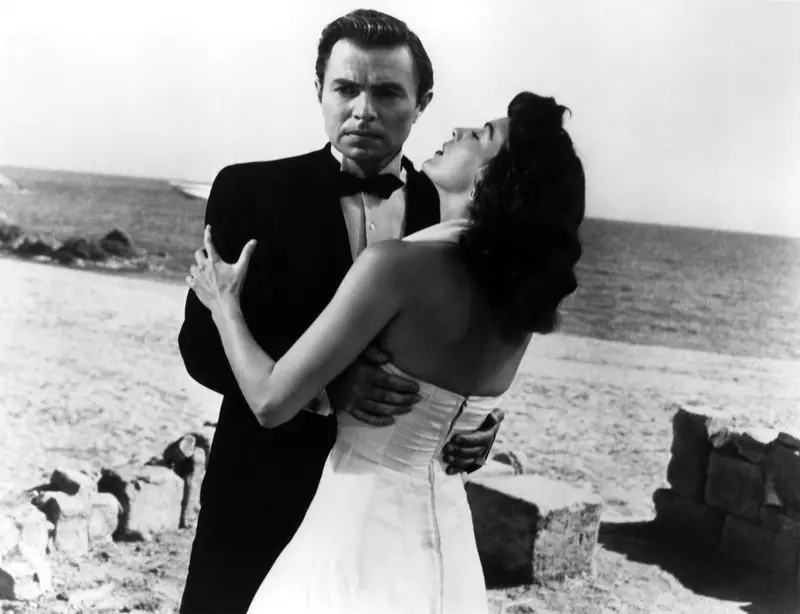
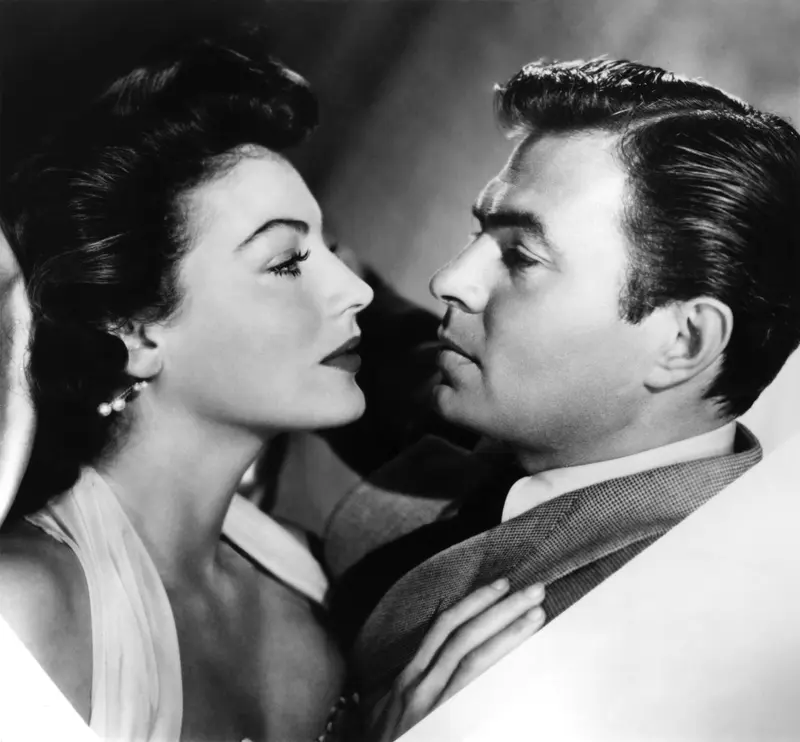
Albert Lewin’s 1951 Technicolor romance retells the sea legend of the Flying Dutchman. Ava Gardner plays Pandora Reynolds, an American singer whom every man in a Spanish port loves, and James Mason plays Hendrik van der Zee, the yacht captain cursed to sail until a woman will die for him. Jack Cardiff’s color photography and the Costa Brava locations are its main draw.
Photo: DoctorMacro.com
In its Canadian edition of 22 Dec 1951, Boxoffice listed 32 features due for January 1952 and named Pandora and the Flying Dutchman as the only Technicolor spectacle among them. The notice called it an MGM release starring James Mason and Ava Gardner with Nigel Patrick. Albert Lewin wrote and directed the picture, a British romantic fantasy taken from the old sea legend. Ava Gardner plays Pandora Reynolds, an American nightclub singer, and Mason plays Hendrik van der Zee, a Dutch yacht captain, while Patrick is billed third in a notice that does not name his part. The Wikipedia entry on the film lists the supporting players in this order: Sheila Sim, Harold Warrender, Mario Cabré and Marius Goring.
The plot rests on the terms of the legend, as the Wikipedia entry on the film sums it up. The Dutchman is condemned to sail forever, but every seven years he may spend six months ashore looking for a woman who loves him enough to die for him, and Hendrik is that man. Every man in a small English colony loves Pandora, and she loves none of them until she falls for Hendrik. He then tries to keep her from becoming that woman. The setting is an invented Spanish port in 1930. Geoffrey Fielding, the colony’s archaeologist, tells the story in flashback after the fishermen’s nets bring up two bodies.
Gardner’s Wikipedia biography names this film and Show Boat, both released in 1951, as the pictures that made her a leading lady and one of the decade’s top stars. The edition to look for is the digital restoration released in February 2020.
The Wikipedia entry on the film quotes Howard Thompson’s review in the New York Times, which was mixed. He called the picture “serious, complex but unexciting” and described it as a study of passion and exalted love. He reserved his praise for Jack Cardiff’s cinematography, citing its “brilliance and invention”. In his view the film was at its best when Cardiff caught the tale’s ghostly side and the “exquisite beauties of Spanish settings and folkways”. Among later critics, Rotten Tomatoes counts 68% of 34 reviews as positive.
The Exhibitor’s index for November 1951 to January 1952 lists the film among MGM’s releases at 123 minutes, in Technicolor and made in Europe, and refers readers to the paper’s review of 10 Oct 1951. It bills Mason ahead of Gardner and Patrick. The paper judged that the “artistic production” should suit “class and art spots”. On the same MGM page, Show Boat appears with Gardner billed second after Kathryn Grayson and the verdict “High rating”, and Lone Star, with Gardner and Clark Gable, is among the titles still to be reviewed or in production. On the 20th Century-Fox page, Mason’s The Desert Fox is described as a war melodrama that would “have to depend on the telling”.
The Boxoffice issue of 22 Dec 1951 reported that eight of the January features were in color, five of them in Technicolor. In the same issue, the week’s top hits, ranked on opening-week runs in key cities, put the film fourth, behind A Christmas Carol, The Racket and Two Tickets to Broadway. The January list also gave Mason a second release, Republic’s A Lady Possessed. The Canadian Moving Picture Digest’s release guide for 12 Apr 1952 had the film playing the Capitol theatres in both Winnipeg and Calgary, again with Mason billed first. In Winnipeg that week, the Odeon was showing Meet Danny Wilson with Frank Sinatra and Shelley Winters, and in Toronto the Eglinton had reached the fourth week of Mason’s 5 Fingers.
In Britain, Kinematograph Weekly counted the film a “notable performer” at the box office in 1951, and the Wikipedia entry places it among the year’s most popular pictures there. According to MGM’s records, it earned $354,000 outside North America and $1,247,000 in the US and Canada. Other records cited by the same entry give a cost of £308,800 against producer income of £225,000. The entry also says MGM held back the American release until Show Boat had opened, and that the strategy worked, since Show Boat confirmed Gardner as a fast-rising star. James Mason’s Wikipedia biography gives a less favorable verdict. It groups Pandora with his first Hollywood pictures and says none of them did particularly well until The Desert Fox revived his career.
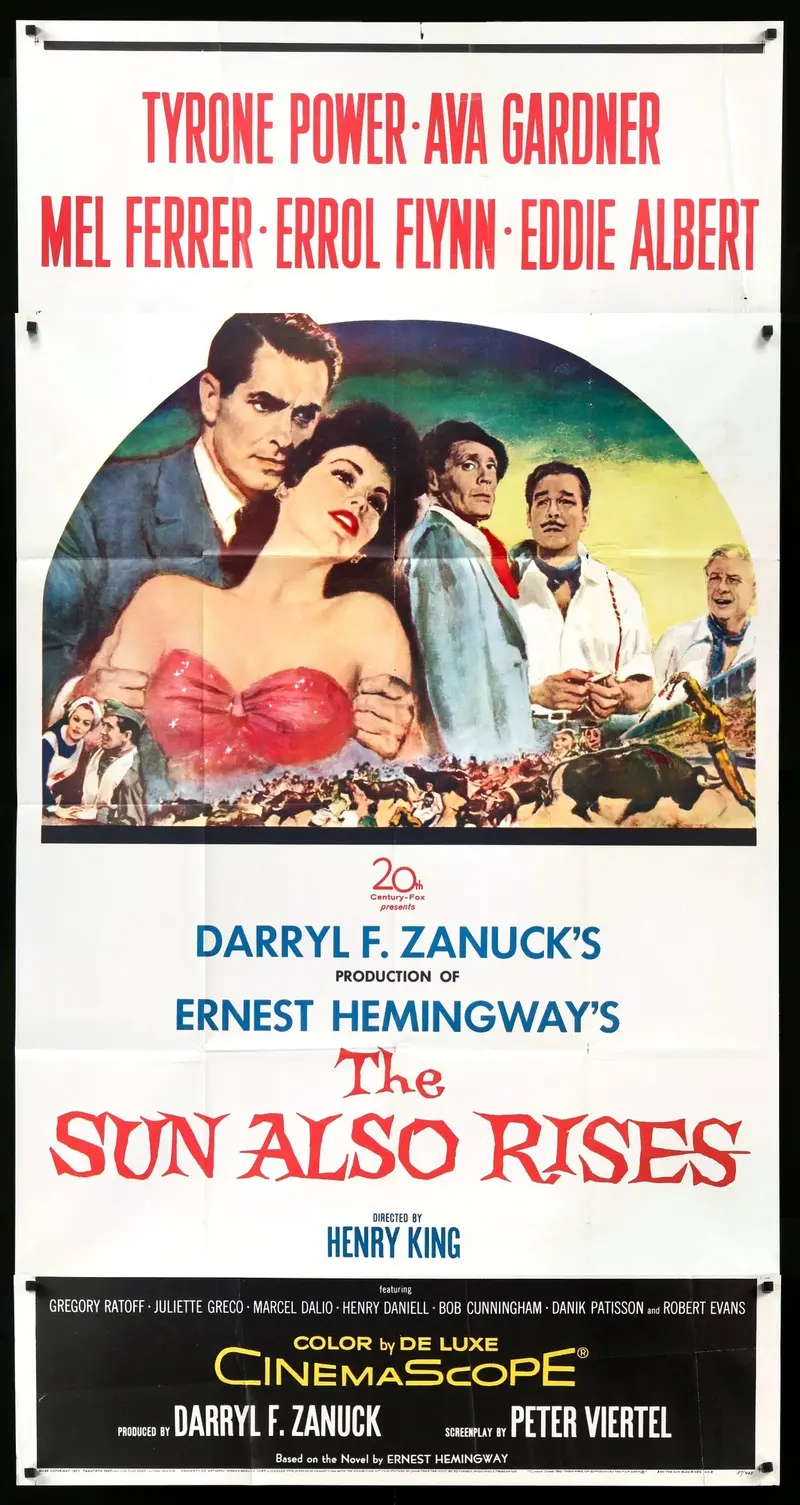
The Wikipedia entry credits Man Ray, a friend of Lewin’s, with some of the sets, a set of cubist chess pieces and several of the paintings seen on screen, including a surrealist scene in the manner of De Chirico. The dialogue is mostly English, but the fishermen of the opening speak Catalan and the bullfighter’s entourage speaks Spanish. The land-speed scenes were shot at Pendine Sands in Wales, and most of the rest at Tossa de Mar, on the Costa Brava. The script alludes to Hemingway’s novel The Sun Also Rises, the Rubaiyat of Omar Khayyam and Matthew Arnold’s “Dover Beach”. Romulus Films shared the financing, and the entry calls the film an early production of the Woolf brothers, James and John. Nigel Patrick’s Wikipedia biography describes the picture as Hollywood-financed. Lewin was an MGM producer at the time, and the entry says the postponement of Quo Vadis in 1949 freed him to make the film.
The article How Ava Gardner’s character dies in The Barefoot Contessa, and how Gardner herself died in 1990 links the film to Gardner’s long connection with Spain, which she first visited in 1950 and where she lived from 1955 to 1966. The article and the Wikipedia entry disagree about Tossa de Mar’s monument to her. The article records a bronze of her as Pandora put up in the summer of 1998. The Wikipedia entry dates a statue of Gardner on the hill above the town’s main beach to 1996, and the sources given here do not resolve the difference.
Gardner’s Wikipedia biography records that she and Mason appeared together again in Mayerling (1968), where she played Empress Elisabeth and he played Emperor Franz Joseph. She told her own story in Ava, published in 1990 as Ava: My Story. Eastern Color published a comic-book adaptation in Movie Love #11 in October 1951. The 2020 restoration took more than a dozen years, and the 4K version, paid for by Cohen Media Group, involved over 700 hours of digital work on 177,120 frames.
It is about Pandora Reynolds, an American singer, who falls for a Dutch yacht captain who turns out to be the cursed Flying Dutchman of the legend. It is set in an invented Spanish port in 1930 and follows his search for a woman who would die for him, a part he refuses to let Pandora play.
Most of it was filmed in Tossa de Mar, on the Costa Brava in Catalonia, Spain. The land-speed record scenes were shot at Pendine Sands in Wales. The village later put up a statue of Gardner, which one account dates to 1996 and another to the summer of 1998.
It ends with Pandora and Hendrik lost at sea. After reading Geoffrey’s translation of the Dutchman’s notebook, she swims out to the becalmed yacht and tells him she is willing to die for him, and then a storm sinks the vessel. Geoffrey, the only survivor who knows the truth, raises a toast to the Dutchman.
In the film, the Dutchman’s purpose is to find a woman willing to die for love of him, which would end his curse. He was a 17th-century captain who killed his wife, wrongly believing her unfaithful, and blasphemed at his trial. Every seven years he may come ashore for six months to search for her.
We use Google Analytics to see which pages help. Allow it?