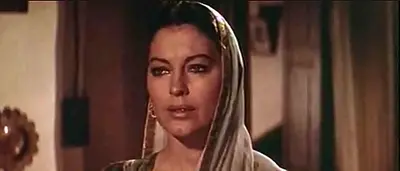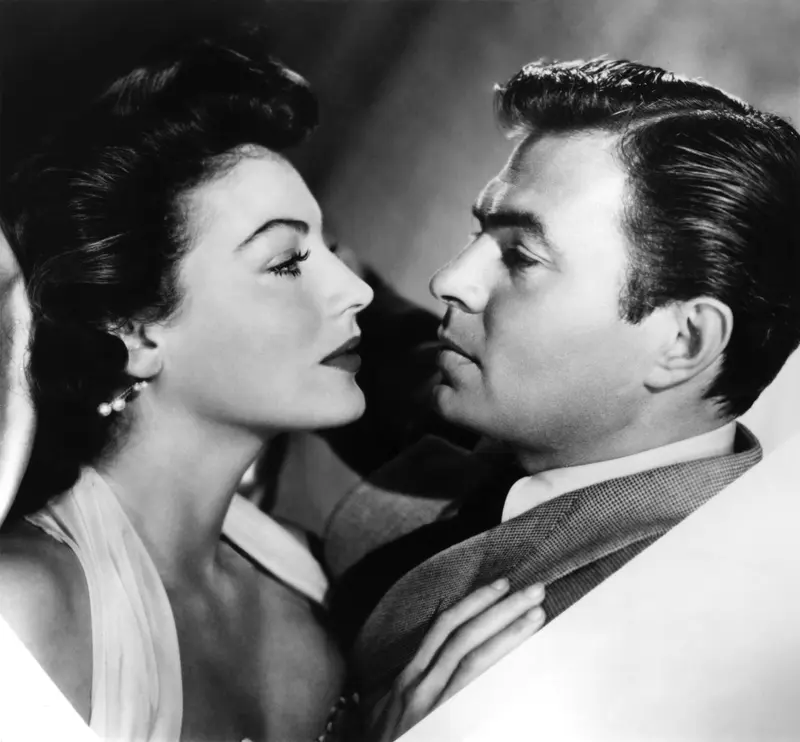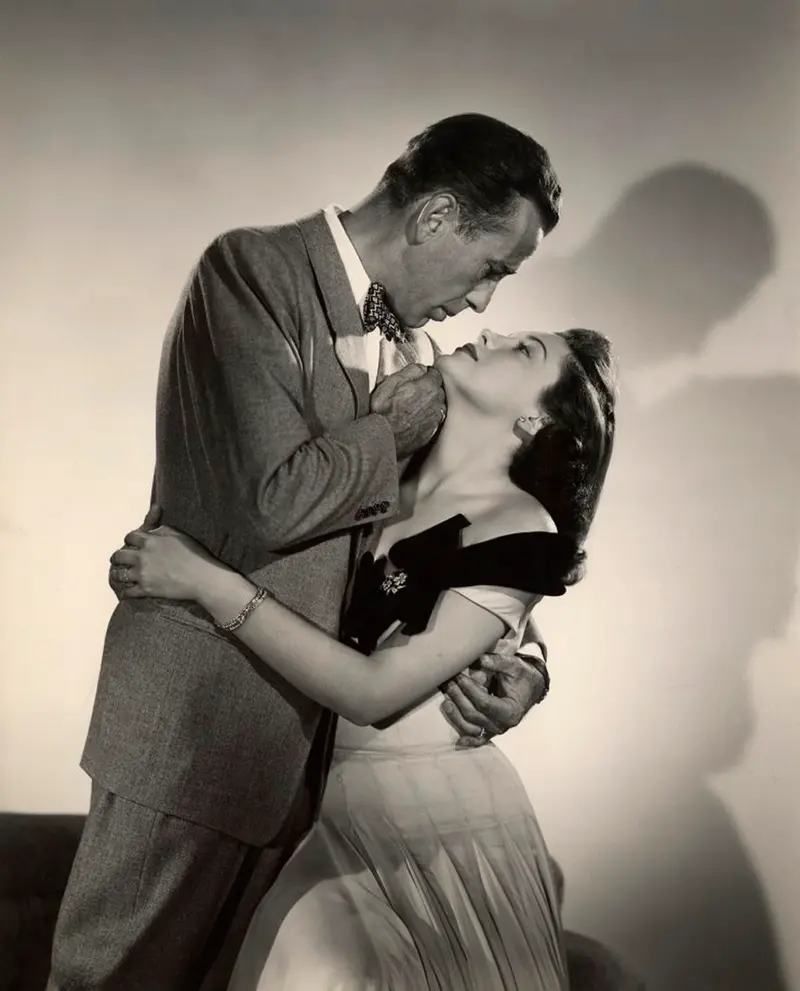
The Barefoot Contessa
Joseph L. Mankiewicz 1954
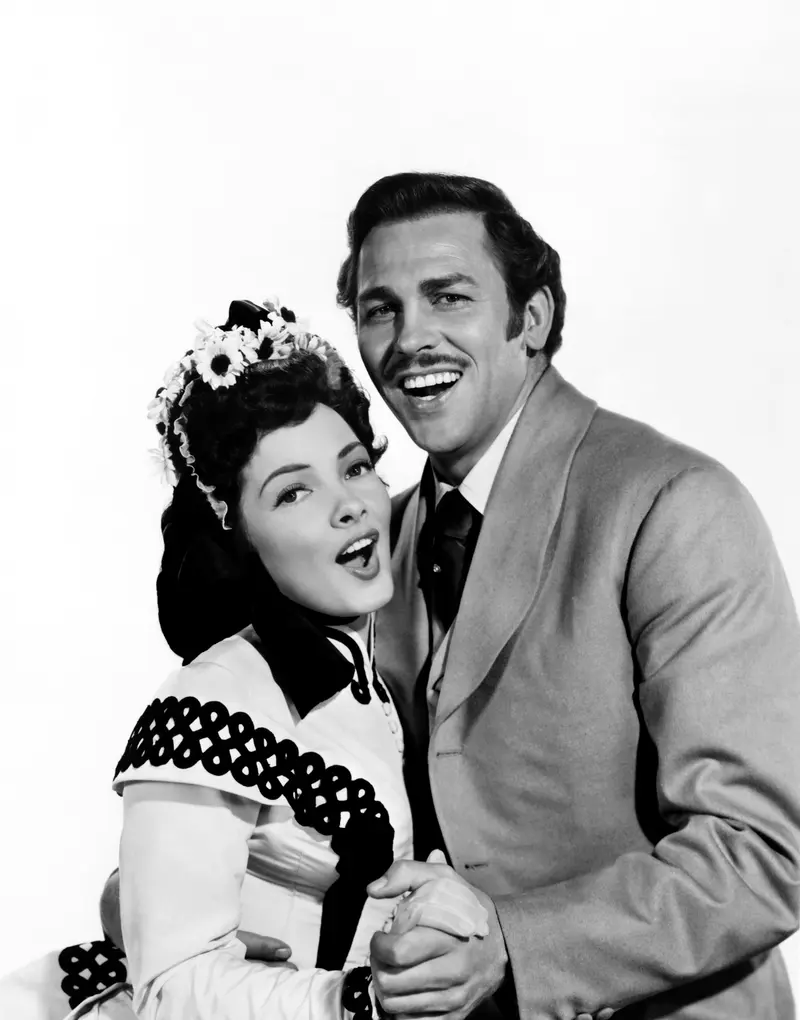
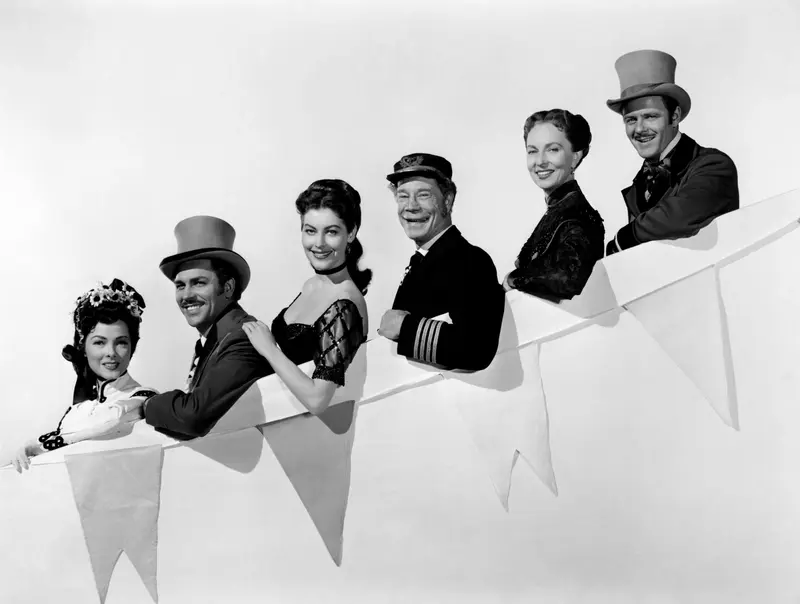
MGM’s 1951 Technicolor version of the Kern and Hammerstein stage musical, and the third film of Show Boat. Kathryn Grayson plays Magnolia Hawks, Ava Gardner plays Julie La Verne and Howard Keel plays the male lead, with William Warfield singing “Ol’ Man River.” In the summer of 1951 MGM advertised that it was setting new records at Radio City Music Hall.
Photo: DoctorMacro.com
In August 1951 MGM ran an advertisement in the Canadian Moving Picture Digest (18 Aug 1951) about Show Boat at Radio City Music Hall. The film had opened there after The Great Caruso’s 10 record-breaking weeks, and the advertisement said it was breaking Music Hall records during the summer’s hottest days. It was MGM’s Technicolor version of the Kern and Hammerstein stage musical, directed by George Sidney. Kathryn Grayson plays Magnolia Hawks, Ava Gardner plays Julie La Verne, and Howard Keel plays the male lead opposite Grayson. It was the third time the show had been filmed.
Julie is the leading lady of the Cotton Blossom, a show boat working the Mississippi. The boat’s engineer, Pete, knows she is part black, which makes her marriage to the leading man, Steve Baker, illegal. Cap’n Andy is forced to put the couple ashore. Magnolia, Julie’s closest friend, takes her place as leading lady opposite the gambler Gaylord Ravenal. The rest of the film follows the couple’s marriage, which takes them off the river to Chicago and finally back again.
For home viewing, Warner Archive released the film on Blu-ray on February 23, 2021, taken from a recent 4K scan of its Technicolor negatives.
The same 18 Aug 1951 issue of the Canadian Moving Picture Digest listed the film in its second week at the Met in Winnipeg and at the Capital in Vancouver, billed in both cities with Grayson and Keel. The advertisement in that issue added that the grosses and crowds were bigger than they had been for Caruso. In the paper’s 1 Sep 1951 issue, the “Ray Presents” columnist wrote that Henry Nathanson had told him Show Boat was breaking records at Loew’s in Toronto. Friends who had seen it there told the columnist that the box-office line stretched for blocks and that audiences often clapped when a song ended. Toronto had two Show Boats that week, because the Melody Fair stage company was closing its season with the musical, its tenth production of 1951. An MGM advertisement in that issue cited an audience-reaction poll by Film Research Surveys that named Show Boat alongside The Great Caruso and An American in Paris.
Boxoffice of 8 Sep 1951 printed two exhibitors’ campaigns. At the Margie Grand Theatre in Harlan, Kentucky, manager Fred Barthel learned that the house had opened in 1929 with the first film of Show Boat. The woman the theater was named for, ill and mostly kept at home for several years, came to the new film on opening day with her son and daughter. The mayor named a Sunday of the run Margie Noe “Show Boat” day, marking the original booking 22 years earlier to the day, and Barthel ran a newspaper contest for the names of the 1929 cast, with passes for the most complete lists. At Loew’s in Indianapolis, manager Howard Rutherford planted contests on five radio stations and sent disk jockeys albums of the film’s songs, and all three daily papers ran stories and gave the picture excellent reviews. His campaign also used lobby displays, window tie-ups and signs on jukeboxes, and 400 Red cabs carried bumper strips. A letter in the same issue listed Show Boat among the high-caliber pictures a moviegoer could see for 50 cents or a dollar, and the issue also named Grayson and Sidney among the volunteers who were to tour the country for the Movietime U.S.A. celebration that October.
The sources disagree on where the film ranked among 1951’s top earners. Grayson’s Wikipedia biography places it third, with earnings above $5.533 million, while the film’s own Wikipedia entry places it second. That entry gives a first-run profit of $2,337,000, on earnings of $2,328,000 outside North America and $5,293,000 in the US and Canada.
Not every reviewer was won over. The Monthly Film Bulletin called Grayson “an indifferent Magnolia” and Gardner’s Julie “bewildered” and at times “ludicrously over-empathic,” and of the principals it credited only Keel with the needed charm. John McCarten of The New Yorker wrote that “it will do for a summer’s evening” and called the cast “unobjectionable but hardly praiseworthy,” except for William Warfield, who sings “Ol’ Man River.” Others were warmer. Richard L. Coe of The Washington Post called the show one of the “most satisfying of our musical plays,” and Harrison’s Reports called it “excellent,” judging that color made it “far superior” to the earlier films. Variety credited Freed with spending on the production with “a lavish and elegant hand” and praised Charles Rosher’s camera work. Bosley Crowther of The New York Times called it “so magnificent in so many ways” that it left the 1936 version “in the shade.” The film’s Wikipedia entry sums up the reviews of the time as positive.
Writing much later, Garry Giddins called it “not a terrible movie” but “not much of a Show Boat.” He faulted it for stripping out the material’s racial complexity, and like McCarten he singled out Warfield. The American Film Institute nominated the film for its 2006 list of greatest movie musicals and “Make Believe” for its 2004 list of 100 songs.
Lux Radio Theatre broadcast a one-hour version on February 11, 1952, with Gardner, Grayson, Keel, Warfield and Marge and Gower Champion. The program had aired an earlier adaptation, based on the 1936 film, on June 24, 1940. Before passing to local stations and cable, the film ran twice on CBS as a holiday offering. Its television life had begun on NBC, which first showed it on January 3, 1972, and repeated it on June 17 of that year. Apart from an experimental 1931 broadcast of a scene from the 1929 film, no production of Show Boat had been televised before.
Gardner’s Wikipedia biography names this film and Pandora and the Flying Dutchman, both of 1951, as the pictures that made her a leading lady. Her own recordings went on the soundtrack album, and in an autobiography written shortly before her death, Ava, she said she was still being paid royalties on it. The article Why Ava Gardner left Frank Sinatra in 1953, just as his comeback began records her later account that her Show Boat fee kept both her and Frank Sinatra going early in the marriage, when his income was going to back taxes, debts and alimony.
Keel’s biography counts his first three MGM pictures as hits and calls Show Boat more popular still. Grayson had already been a lead in Anchors Aweigh, and her biography notes that she sang “Make Believe” in the Show Boat sequence of Till the Clouds Roll By, five years before she starred in the remake. She and Keel were teamed again in Lovely to Look At (1952) and Kiss Me Kate (1953).
Lena Horne, who had played Julie in a short Show Boat sequence in the 1946 Kern biopic Till the Clouds Roll By, was first meant to have the part, after Judy Garland, Peggy Lee and Dinah Shore had been passed over. Studio executives were nervous about giving one of the leads to a glamorous black actress, and Gardner was chosen. According to Sidney, MGM executives had wanted Shore, and he tested her but found she “wasn’t right.” His test of Gardner had her miming to a Horne recording. Sneak previews with Gardner’s own singing went badly, so Annette Warren dubbed her songs, “Bill” among them. Gardner’s real voice is heard only in a partial reprise of “Can’t Help Lovin’ Dat Man.” Not every player was billed: Regis Toomey as the sheriff and Frances E. Williams as Queenie appear in neither the film’s credits nor its posters.
The full-size stern-wheeler built on the MGM backlot lake later sold at the studio’s property auctions for $15,000 in 1970 dollars. The boat never left the backlot. The arrival scene cuts between studio shots of the boat docking and location footage of crowds racing along the bank of the Mississippi.
William Bayer’s book The Great Movies says Freed’s rule was to cut anything in his musicals that did not move the story along. The dancers Frank and Ellie were turned from the stage show’s barely talented pair into a debonair couple in the manner of Fred Astaire and Ginger Rogers, and almost all the comic scenes kept in 1936 were cut. Ravenal leaves Magnolia without learning she is pregnant, and Julie’s part was enlarged. John Lee Mahin threw out nearly all of Oscar Hammerstein II’s dialogue and overhauled the story, the ending most of all. The stage show, from 1927, was drawn from Edna Ferber’s 1926 novel, and its treatment of racial inequality was played down, though the interracial subplot stayed. Unlike the 1936 film, this one used nobody from the original Broadway company.
Yes. The 1951 MGM film is a musical romantic drama based on the 1927 Jerome Kern and Oscar Hammerstein II stage show. Its songs include “Make Believe” and “Ol’ Man River,” which William Warfield sings, and Toronto audiences in 1951 often applauded when a number ended.
Show Boat follows the performers on the Cotton Blossom, a show boat on the Mississippi. Julie, the leading lady, is forced off the boat once it comes out that she is part black. Her friend Magnolia takes her place and marries the gambler Gaylord Ravenal, and the story follows the couple to Chicago and back to the river.
No. The show boat was a full-size stern-wheeler built on the lake of the MGM backlot, and it stayed moored there. The arrival scene mixes backlot shots of the boat with location footage of crowds on the bank of the real Mississippi. The boat later sold at MGM’s property auctions for $15,000 in 1970 dollars.
We use Google Analytics to see which pages help. Allow it?