The Barefoot Contessa
Joseph L. Mankiewicz 1954
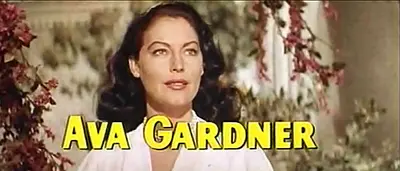
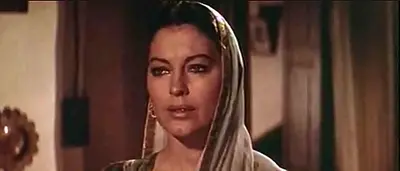
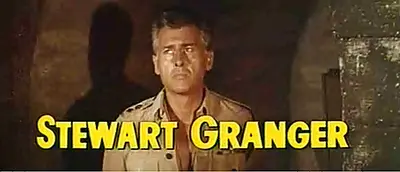
George Cukor’s 1956 MGM drama, shot in CinemaScope and Eastman Color, is set in India in 1947 as British rule ends. Ava Gardner plays Victoria Jones, an Anglo-Indian army officer on leave in the railway town of Bhowani. Three men pull her three ways, and Stewart Granger and Bill Travers play two of them. It was filmed on location in Pakistan and in England.
Trailer screenshot, Wikimedia Commons (Public domain)
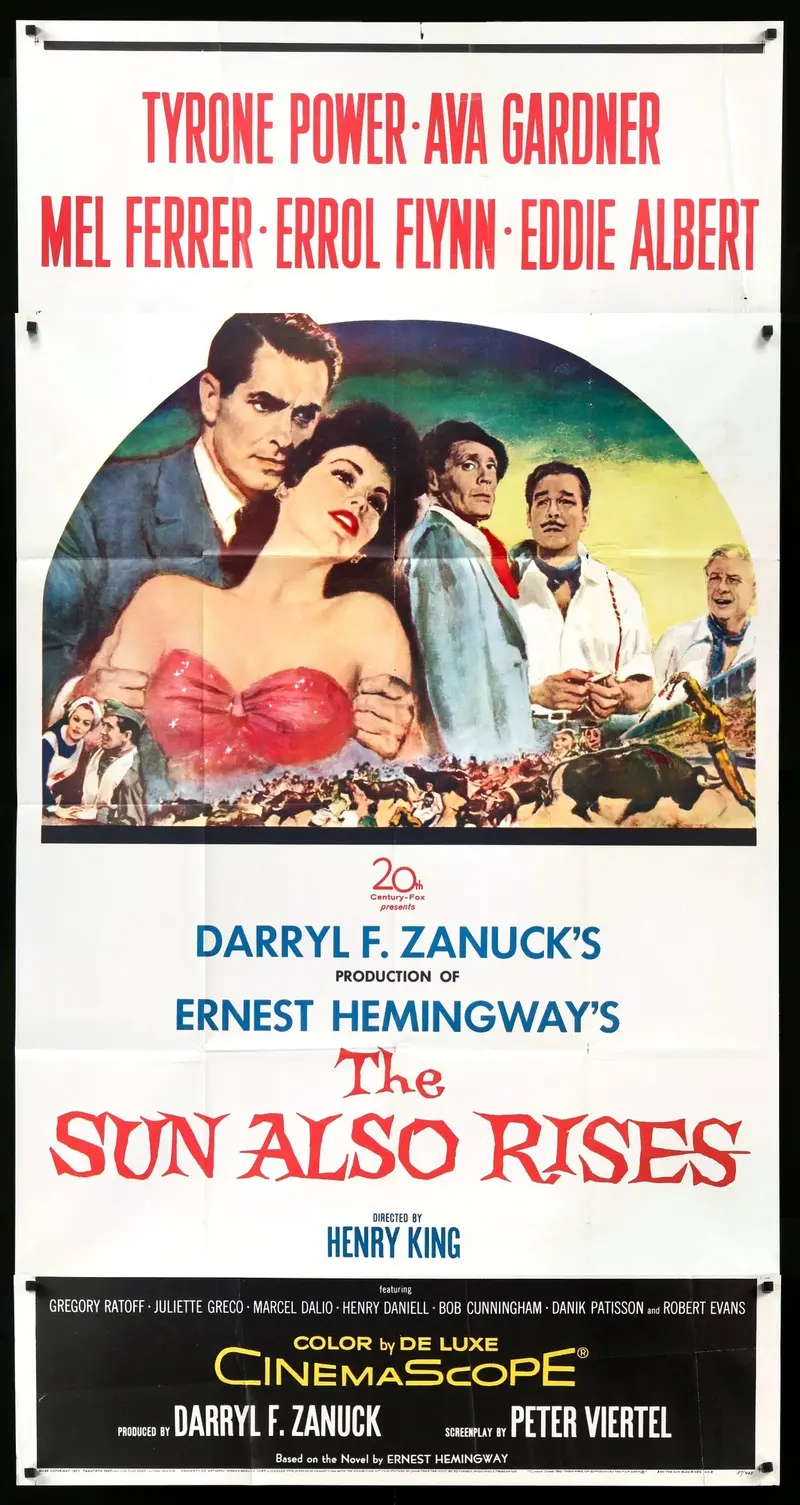
Variety’s Broadway grosses page of 6 Jun 1956 reported that Bhowani Junction, paired with a stage show at the Music Hall, was drawing the largest sum of any picture in town. The paper expected a “good” $130,000 for its second week there. The film is MGM’s adaptation of John Masters’s novel, directed by George Cukor and produced by Pandro S. Berman, with a screenplay by Sonya Levien and Ivan Moffat. Bill Travers plays Patrick Taylor, a rail traffic superintendent, and Stewart Granger plays Lieutenant-Colonel Rodney Savage, an officer of the British Indian Army. Ava Gardner plays Victoria Jones, an Anglo-Indian woman who has been serving in the British Army and whose childhood sweetheart was Taylor. In the catalog’s list of Gardner films, it falls between The Barefoot Contessa (1954) and The Sun Also Rises (1957).
Three men are drawn to Victoria, each from a different community. Ranjit Kasel (Francis Matthews) is a Sikh who works alongside Taylor, Taylor is Anglo-Indian like her, and Savage is British. She has come home on leave to Bhowani, a fictional town in north-western India, where Gandhi’s supporters are campaigning for independence while a revolutionary called Davay leads communist riots and sabotage. The year is 1947, and British rule is ending. While the men compete for her, she tries to work out where she herself belongs.
The same 6 Jun 1956 issue of Variety carried a St. Louis report headlined “‘Bhowani’ Bright $13,000 in St. Loo.” It called the film the city’s “big noise” that week and credited Loew’s with a “nice” $13,000, against $6,500 the house had taken the week before with other pictures. In Buffalo, the paper listed $11,000 for the film’s six-day second week at Loew’s house there. Variety’s national roundup in that issue said the picture would again finish third, as it had the week before, and described its showing as “a bit uneven.” In the Motion Picture Herald volume for April to June 1956, MGM had run trade advertisements after a screening in its home office projection room. One, headed “BHOWANI BOMBSHELL!”, claimed “Two years in production” and a cast of 10,000, and said Gardner was “never so alluring” and Granger “rugged, romantic.” Another MGM notice in that volume called the film “One of the year’s big pictures,” promised “a drama of passion and excitement” and noted that it was filmed in Pakistan. A year before that, the Canadian Moving Picture Digest’s MGM supplement of 4 Jun 1955 had listed the picture among the studio’s productions under way, describing it as a best-selling novel then shooting in Pakistan and England with Gardner and Granger starring. A photo caption on the same page called it an “exciting adventure drama” in CinemaScope. All of the MGM lines are the studio’s own sales copy, and none is an independent review.
The later sources do not agree on how the film fared. One account records $2.8 million in earnings outside North America and $2,075,000 inside it, a gross profit of $1,238,000, and 1,554,970 admissions in France. The account of Granger’s career, by contrast, lists the film among his box-office disappointments. The same account records that Granger was then teamed with Gardner and David Niven in The Little Hut (1957), a sex farce that surprised everyone by becoming a hit.
The later record names Neelo, who went on to become a Pakistani film star, as making her first screen appearance here, as a reporter in a crowd scene. A. H. Rana, the production manager and casting assistant in Pakistan, had introduced her to Cukor. Granger’s Savage wears the Golden Arrow formation sign of the Pakistan 7th Division, and several Pakistan Army units took part in the filming. For the same reason the script moved Savage from the book’s Gurkha battalion to command of the 1/13 Frontier Force Battalion (Coke’s Rifles). Location work was done in Lahore, Pakistan, and the rest in England, at MGM-British Studios in Borehamwood and on the Longmoor Military Railway. MGM had wanted India, but the Indian government would not cooperate, insisting on script approval and imposing high taxes. Cukor had gone to India in October 1954 to research the film, and he was quoted as praising Masters for showing the country without what he called “the usual hokey-pokey atmosphere” found in most writing about it. MGM had paid more than $100,000 for the rights, outbidding two other studios, and named Gardner and Granger as leads almost at once. Gardner was then on suspension at the studio for refusing Love Me or Leave Me. The novel was Masters’s fourth about India.
The later account of the adaptation points first to the casting. Masters’s Victoria has distinctly brown skin and looks very like an Indian girl in a sari, and much of the book turns on her pull toward being exactly that. In that account, the choice of Gardner, a white American, changed all of it. Masters’s own sequel, To the Coral Strand, was never filmed. In it Savage stays in India after independence without marrying Victoria, and he eventually finds love with an Indian woman. The film also alters the novel’s ending. In the book Victoria looks for her future with Patrick, her fellow Anglo-Indian, while the film gives Patrick a heroic death and pairs her with Savage, a change the account of Granger’s career also notes.
Travers had his own tie to the author. He served in Burma with the 4th Battalion, 9th Gorkha Rifles, attached to Orde Wingate’s staff, and there he came to know Masters, who was his brigade major. MGM had signed Travers after his title role in Geordie (1955), believing he would become a big star, and cast him in this expensive epic. For more on Gardner, see Lee Server’s biography Ava Gardner and her own memoir Ava. The sources consulted include no review printed when the film opened, so they do not record how critics received the performances.
Bhowani Junction is about Victoria Jones, an Anglo-Indian woman in the British Army who comes home to a fictional town in north-western India in 1947, as British rule ends. Amid riots and sabotage, a British officer, an Anglo-Indian railwayman and a Sikh are all drawn to her while she tries to decide where she belongs.
Bhowani Junction was filmed in England, at MGM-British Studios in Borehamwood and on the Longmoor Military Railway, and on location in Lahore, Pakistan. MGM had wanted to shoot in India, but the Indian government demanded script approval and imposed high taxes.
The film was made in Pakistan and England. The Canadian Moving Picture Digest of 4 Jun 1955 already reported it being shot in both countries, and MGM’s 1956 trade ads sold it as filmed in Pakistan.
John Masters wrote Bhowani Junction, a 1954 novel and his fourth about India. Sonya Levien and Ivan Moffat wrote the screenplay for George Cukor’s 1956 MGM film.
We use Google Analytics to see which pages help. Allow it?